The key to successfully reaching your audience is understanding your customers. One of the most effective tools marketers have at their disposal is the customer journey map. This strategic tool visualizes the customer’s experience from the initial awareness of a brand to post-purchase interactions, helping businesses identify opportunities for enhancement and ensuring a seamless experience. In this blog, we’ll explore the significance of customer journey mapping and how it can transform marketing strategies.
What is a Customer Journey Map?
A customer journey map is a visual representation of the various stages a customer goes through when interacting with a brand. It outlines each touchpoint, including awareness, consideration, purchase, retention, and advocacy. By mapping these stages, businesses gain insights into customer behaviors, emotions, and pain points, enabling them to identify opportunities and tailor their strategies to meet customer needs more effectively.
Understanding Customer Behavior
Customer journey mapping starts with a deep understanding of customer behavior. By analyzing data from various sources—such as website analytics, social media interactions, and customer feedback—marketers can identify common pathways that customers take. This analysis is crucial, as it helps businesses recognize which touchpoints are most impactful and which may need improvement.
For instance, a customer might first encounter a brand through social media advertising, then visit the website for more information, followed by reading reviews, before finally making an online purchase. Each of these stages can affect the customer’s perception of the brand, highlighting the importance of ensuring a positive experience at every touchpoint. Consistency across all customer touchpoints is crucial to ensure expectations are being met and there is strong brand trust being built.
Enhancing Customer Experience
One of the primary benefits of a customer journey map is its ability to enhance customer experience. By visualizing the entire journey, marketers can identify pain points—areas where customers may encounter difficulties or frustrations. For example, if many customers abandon their shopping carts after viewing the checkout page, this may indicate a complicated process that needs simplification.
Addressing these issues not only improves customer satisfaction but also fosters loyalty. Happy customers, who had a great experience are more likely to return and recommend the brand to others, creating a cycle of positive engagement and growth.
Aligning Marketing Strategies
Creating a customer journey map helps businesses align their marketing strategies with customer needs. By understanding what customers are looking for at each stage, marketers can tailor their messaging and offers to resonate better with their audience.
For example, during the consideration phase, potential customers may be looking for detailed product information or comparisons. Marketers can create targeted content, such as blog posts, videos, and infographics, to provide the necessary information. This alignment ensures that the marketing efforts are relevant and effective, ultimately leading to higher conversion rates.
Identifying Opportunities for Improvement
A customer journey map is not just a tool for understanding current processes; it also highlights opportunities for improvement. By analyzing the map, businesses can identify gaps in their offerings or areas where they may be falling short.
For instance, if feedback indicates that customers feel overwhelmed by the amount of information during the purchase phase, marketers might consider simplifying their messaging or providing clearer guidance. Additionally, the map can reveal opportunities for upselling or cross-selling based on customer behavior patterns.
Facilitating Cross-Departmental Collaboration
Creating a customer journey map encourages collaboration across various departments within a company. Marketing, sales, customer service, and product development can all benefit from a unified understanding of the customer experience. By working together, teams can create a holistic approach to customer engagement, ensuring that every department is aligned in its efforts to meet customer needs.
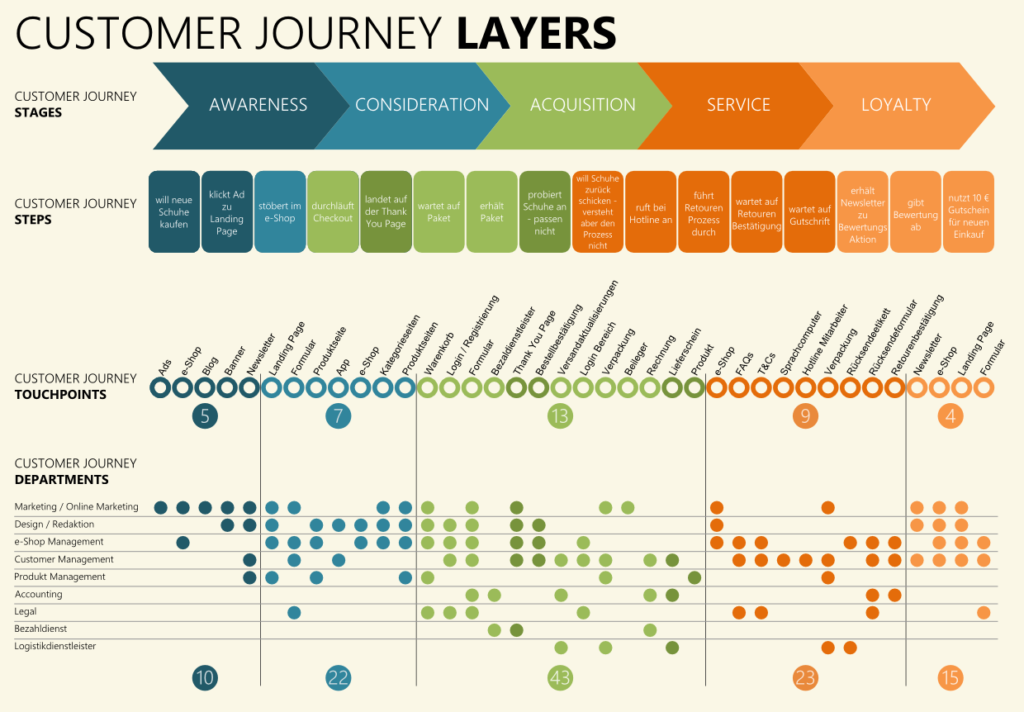
For example, if the customer journey map reveals that customers frequently contact support after their purchase, the product development team may need to revisit their onboarding process or provide better instructions. This cross-functional collaboration can lead to innovative solutions and improved customer experiences. It can also help determine who is responsible for what portion of the customer experience which increases collaboration and allows for stronger ownership in the designated area. This chart can be a useful tool in identifying your customer journey and breaking down where different responsibilities live.
Measuring Success
A well-constructed customer journey map allows businesses to measure the effectiveness of their marketing strategies. By setting key performance indicators (KPIs) for each stage of the journey, marketers can track progress and make data-driven decisions. For example, metrics like conversion rates, customer satisfaction scores, and customer lifetime value can provide valuable insights into the overall success of marketing efforts.
Regularly revisiting and updating the customer journey map ensures that businesses stay responsive to changing customer behaviors and market trends. This adaptability is crucial in a fast-paced digital environment where customer preferences can shift rapidly.
Ultimately, creating a customer journey map is essential for any business looking to enhance its marketing strategies. By providing a clear understanding of customer behavior, identifying pain points, aligning marketing efforts, and fostering collaboration across departments, customer journey mapping serves as a cornerstone for effective marketing.
Investing time and resources into this process not only improves customer experiences but also drives brand loyalty and business growth. As customer expectations continue to evolve, businesses that prioritize understanding their customers through journey mapping will be well-positioned to succeed in the competitive marketplace. Embracing this strategic tool is not just a trend; it’s a necessity for sustainable growth and success in the ever-changing world of marketing.